Why Commission Confusion Is So Common in Roofing Sales
Commission confusion doesn’t happen because roofing companies are disorganized. It happens because most sales and roofing commission tracking software systems were never designed to work together.
Confusion usually comes from a few predictable issues:
- Sales data is spread across multiple tools, with estimates, contracts, and job progress all tracked separately
- Job prices change due to supplements, upgrades, or adjustments that never make it into commission calculations
- Commissions are paid at specific job stages, but those stages aren’t consistently tracked across systems
- Customer payments come in over time, making it difficult to know which commissions are actually earned versus projected
- Spreadsheets rely on manual updates that are easy to miss, delay, or enter incorrectly
Because roofing sales move quickly, even small gaps between systems create big problems. A number that was accurate one week can be outdated the next, leaving sales reps unsure what they’ll actually be paid and managers unsure which numbers to trust.
RoofIT eliminates these issues by connecting sales, contracts, and commission calculations inside one platform. When commissions are calculated directly from live job data, everyone works from the same source of truth. There are fewer disputes, clearer expectations, and confidence in every commission payout.
Commission Calculated Directly From the Job
Roofit tracks every step of the sales process, from initial lead to signed contract to completed job. Because all of this information lives in one place, sales totals are always accurate and up to date.
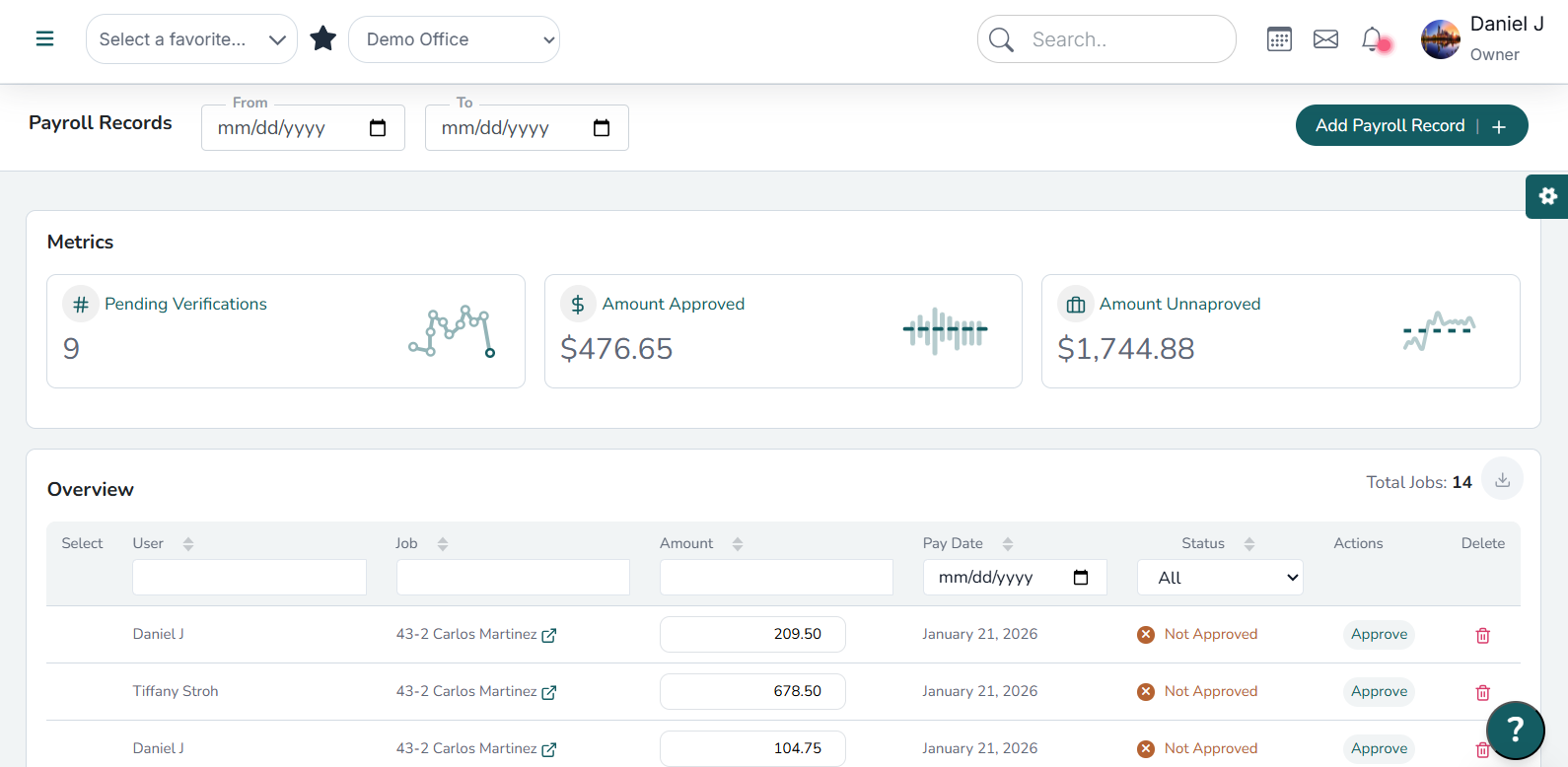
Once a job is marked sold, Roofit records the contract value and associates it with the correct sales rep. As payments are collected or jobs move through production stages, your sales data and commission calculations updates automatically based on what’s actually happening with that job, not what someone remembers to enter later. There’s no need to re-enter numbers or reconcile spreadsheets at the end of the month.
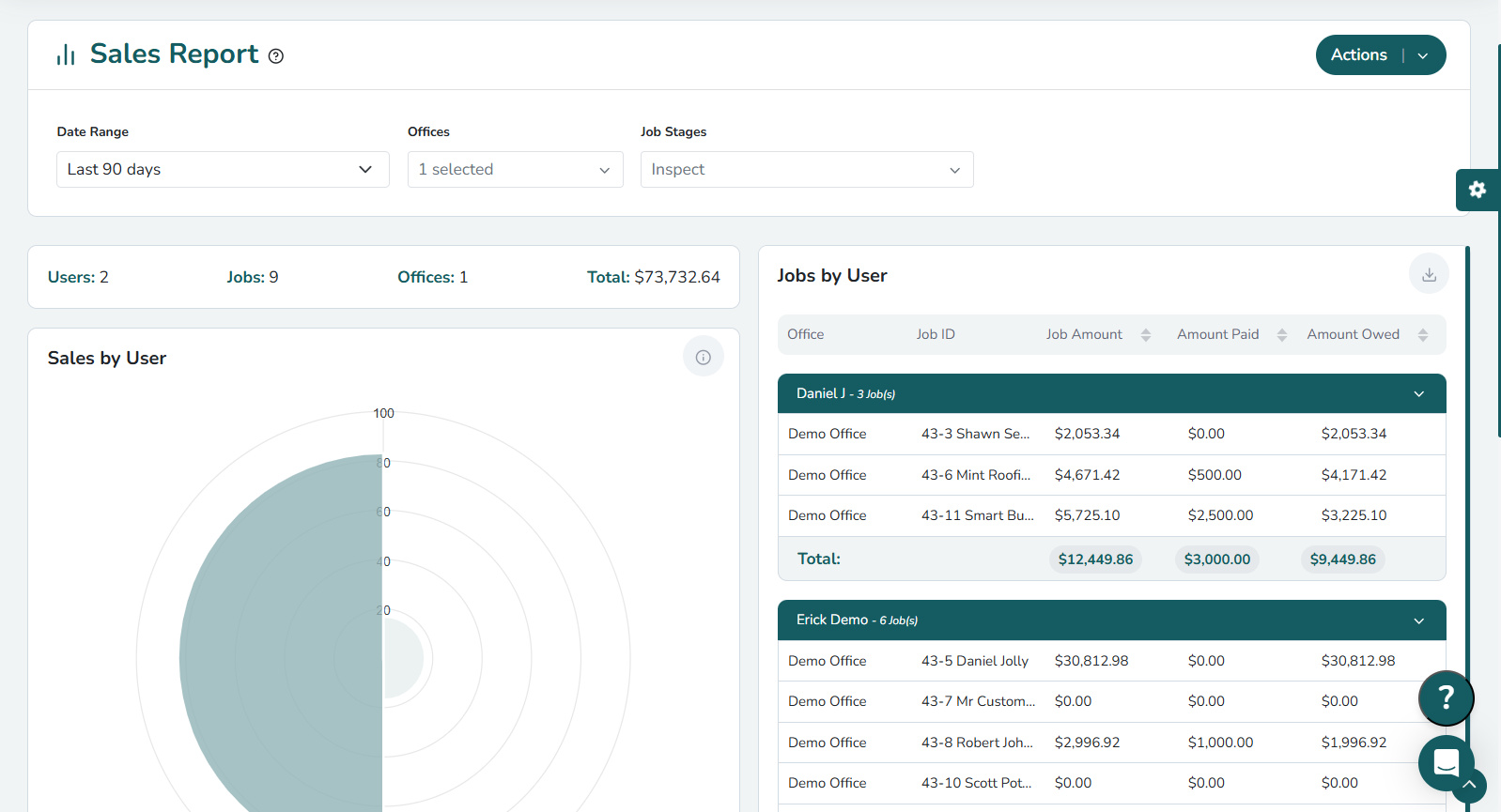
This real-time visibility is one of the biggest advantages of using roofing sales management software instead of manual systems. Managers can see exactly how much each rep has sold, how much revenue is pending, and how close the team is to hitting monthly or quarterly goals.

Commission Rules That Match How Roofers Actually Get Paid
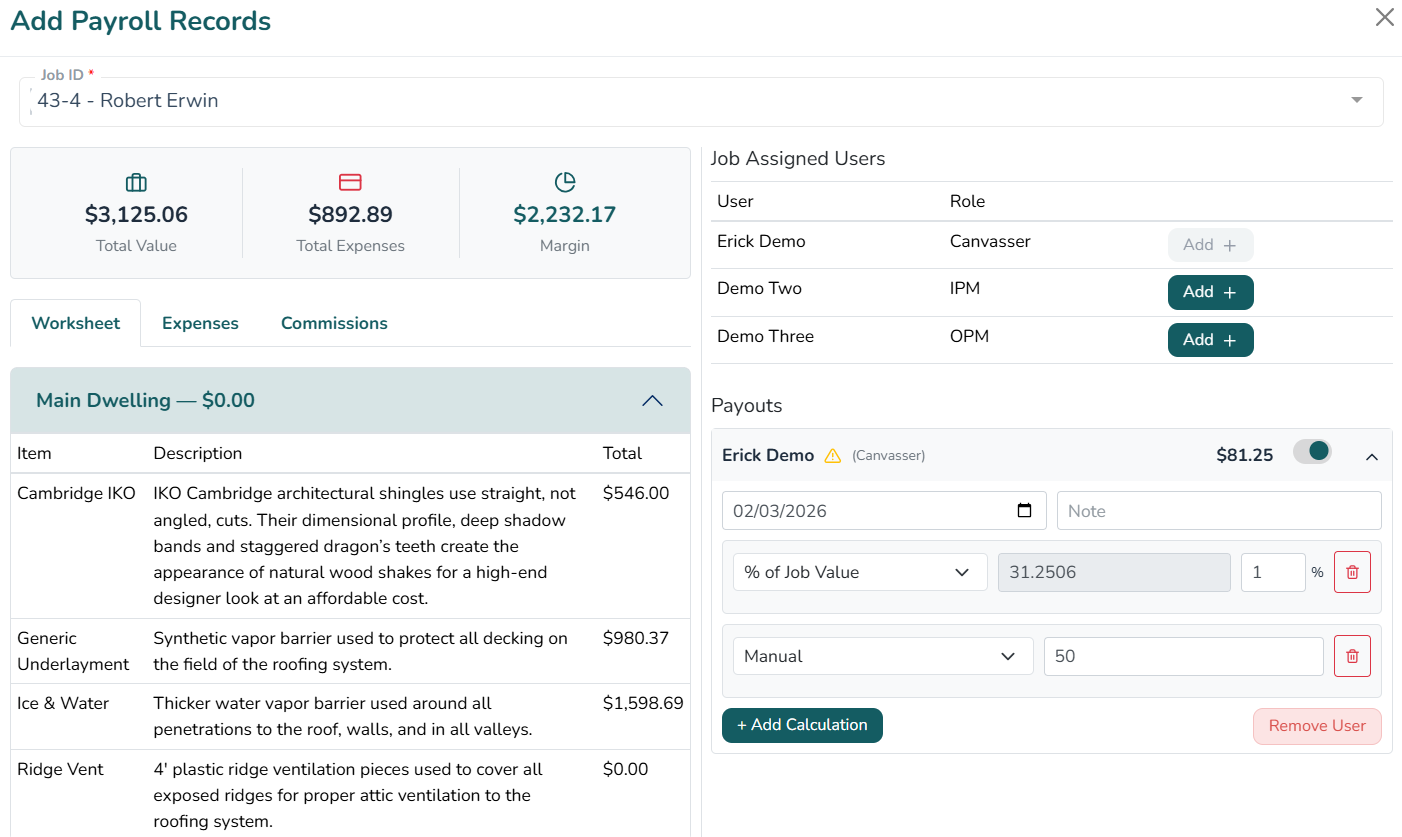
No two roofing companies pay commission the same way. Some use flat percentages, others rely on tiers or volume-based incentives. Roofit’s roofing commission tracking software is flexible enough to handle different commission structures without manual workarounds.
RoofIT supports commission structures such as:
- Paying a percentage of commission when a job goes under contract
- Paying an additional percentage when the job is completed
- Adding extra commission for upgraded items sold on the job
- Calculating commission based on the actual value of upgrades, not estimates
- Paying additional commission based on job margin as costs and expenses are tracked
You define exactly how commissions should work for your business, and they are tied directly to the people assigned to the job, whether that’s a canvasser, sales rep, or another role on your team.
RoofIT applies those rules consistently across every job. Once your structure is set, commissions are calculated automatically as jobs move forward, upgrades are added, and costs are recorded.
Live Visibility Into Sales Performance
Commission problems usually come down to visibility. When sales reps don’t know where they stand and managers can’t quickly see what’s working, frustration builds fast. RoofIT fixes that by making sales and commission data easy to see, in real time, for everyone who needs it.
Sales reps don’t have to guess how they’re performing or be surprised at the end of the month. They can see which jobs are tied to them, what stage those jobs are in, and how their commission is tracking as things move forward.
For managers, transparency means clarity instead of chaos. You can quickly see who’s consistently closing deals and who might be struggling. Live performance tracking makes it easy to understand what’s happening right now, not weeks after the fact when it’s too late to fix.
Most importantly, everyone is looking at the same numbers. That kind of transparency builds trust without trying to.