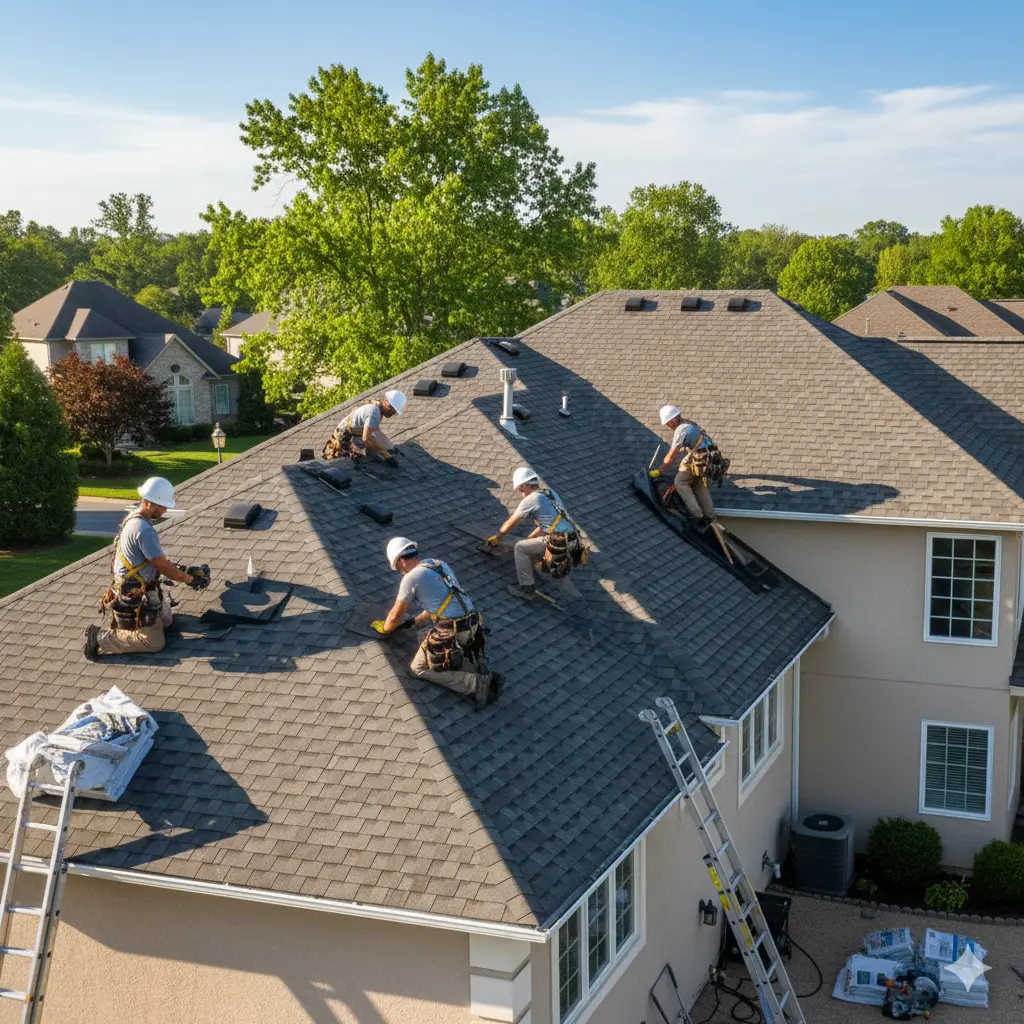
EagleView roof reports provide aerial roof measurements that contractors can use to estimate materials, prepare proposals, and plan roofing projects without manually measuring every section of a roof. Depending on the report and property, roofers can receive measurements for areas, pitches, ridges, hips, valleys, eaves, rakes, and other roof features. The convenience can save time during estimating, but ordering reports for every lead also creates another expense roofing companies need to consider.
Measurement reports have become a familiar part of residential and commercial roofing. Instead of sending someone onto every roof during the early stages of a sale, contractors can use aerial measurements to get much of the information needed to build an estimate.
That doesn’t mean every roofing company needs the same report for every project. Understanding what you’re paying for, when aerial measurements make sense, and how measurement costs fit into your estimating process can help you make better decisions.
What Are EagleView Roof Reports?
EagleView uses aerial imagery and measurement technology to create reports showing the dimensions and characteristics of a roof. Contractors can order reports for individual properties and use the resulting measurements when estimating roofing work.
Rather than starting with a tape measure and notepad, the roofer receives property data that can help calculate how much roofing material a project may require.
A roof report may contain information such as:
- Total roof area
- Individual roof sections
- Roof pitch
- Ridge lengths
- Hip lengths
- Valley lengths
- Eave lengths
- Rake lengths
- Perimeter measurements
- Diagrams of the roof structure
The exact information available depends on the report ordered and the property.
These measurements can be particularly useful on roofs with several planes, steep slopes, dormers, valleys, or other features that make estimating more involved.
Why Do Roofing Contractors Use Roof Measurement Reports?
Time is one of the biggest reasons.
Driving to a property, setting up ladders, accessing the roof, taking measurements, checking those measurements, and returning to the office can consume a significant portion of the workday. That investment makes sense for some projects, but it can become expensive when a roofing company is quoting a large number of jobs.
Aerial roof measurements give contractors another option.
Faster Estimates
When measurements are available without physically climbing onto the roof, an estimator can begin putting together job quantities sooner.
That can be especially useful after a major storm, when a roofing company may receive far more requests for inspections and estimates than it normally handles.
Getting measurements quickly doesn’t eliminate the need to inspect a property when an inspection is appropriate. It does reduce the amount of time that has to be spent gathering basic dimensions.
Fewer Trips for Early Estimates
Not every lead becomes a customer.
If your sales team physically measures every roof before determining whether the homeowner is serious about moving forward, a lot of time can be spent on estimates that never turn into jobs.
Remote measurements may allow the company to handle parts of the estimating process without making an additional trip solely for measurements.
Material Planning
Accurate measurements matter when determining how many shingles, rolls of underlayment, pieces of flashing, ridge cap shingles, and other materials to order.
Ordering too little can delay the job. Ordering far too much ties up money in unnecessary materials and may create additional work returning unused products.
A measurement report gives the estimator information that can be used alongside waste calculations and job-specific requirements when preparing an order.
What Is Included in an EagleView Roof Report?
There are different report options, so contractors should check the current specifications before ordering. In general, roof measurement reports are designed to provide a visual representation of the roof along with measurements that would otherwise need to be collected manually.
A contractor may see a roof diagram with individual edges identified and measurements assigned to each section.
That information can help answer basic estimating questions:
- How large is the roof?
- How much ridge material could be needed?
- How many feet of valley are present?
- How complicated is the roof shape?
- What pitches are involved?
Those details influence labor and material requirements, which ultimately affect the price presented to the customer.
A measurement report should still be reviewed rather than automatically treated as a completed estimate. Roof condition, decking problems, flashing requirements, ventilation, local codes, accessibility, tear-off conditions, and other factors can affect the scope of work.
How Accurate Are Aerial Roof Measurements?
Accuracy matters because even small measurement differences can become expensive across a large roof.
Aerial measurement providers use imagery and technology to calculate dimensions without requiring someone to physically measure each roof plane. The quality and availability of imagery, roof visibility, property characteristics, and report type can affect the information available for a particular address.
Contractors should have a process for reviewing measurements before turning them into final material orders or contracts.
It’s also important to distinguish between measuring and inspecting. A roof measurement tells you about dimensions and geometry. An inspection tells you about condition.
An aerial report may help you determine the size of a roof, but a contractor may still need to assess issues such as:
- Missing or damaged shingles
- Soft decking
- Active leaks
- Flashing problems
- Ventilation
- Previous repairs
- Multiple roofing layers
- Chimney or skylight conditions
- Storm damage
Both types of information may be needed before determining the final scope of a roofing project.
How Much Do EagleView Roof Reports Cost?
Pricing for EagleView reports can vary according to the product ordered, property, turnaround requirements, account arrangements, and other factors. Contractors should check EagleView’s current pricing or their account terms rather than relying on an old online price.
For a roofing business, however, the more useful calculation is often cost per sold job rather than cost per report.
Suppose your company pays for measurement reports on a large number of leads, but only a fraction of those homeowners sign contracts. The cost of the reports for unsuccessful leads becomes part of your customer acquisition expense.
That doesn’t automatically make the reports too expensive. If they save your estimators enough time to quote more work and close additional jobs, the expense may be worthwhile.
Roofing owners should track:
- Number of reports ordered
- Total report costs
- Leads receiving reports
- Estimates completed
- Jobs sold
- Average job value
- Closing rate
- Measurement cost per sold job
Looking at those numbers over several months provides a much clearer picture than evaluating a report based only on its individual purchase price.
When Does Ordering a Roof Report Make Sense?
There are jobs where remote measurements can be especially useful. A steep or complicated roof is an obvious example. Collecting measurements manually may take considerably longer and expose workers to additional fall hazards. High lead volume is another.
After hail, wind, or other severe weather affects an area, contractors may suddenly have dozens or hundreds of homeowners requesting estimates. Sending someone to manually measure every property can create a bottleneck.
Roof reports may also make sense when:
- The property is far from the office.
- An estimator needs measurements before an appointment.
- A salesperson is preparing several proposals in one day.
- The roof has complicated geometry.
- The company wants to reduce unnecessary roof access.
- Measurements are needed for early material calculations.
The decision doesn’t have to be all or nothing. A roofing company can use aerial measurements when they save time and manual measurements when those make more sense.
When Should You Measure a Roof Manually?
Roof measurement technology is useful, but there are still situations where getting eyes and hands on the property is important.
Unusual structures can require closer attention. Additions, covered patios, detached structures, tree coverage, recent construction, or changes to the property may complicate what can be determined from existing imagery.
A roofer may also want to verify measurements when a small difference could significantly change material quantities or pricing.
Manual verification can be useful when:
- Aerial imagery doesn’t clearly show the entire structure.
- The property has recently been remodeled.
- Several structures are included in the project.
- Roof features are difficult to identify remotely.
- Measurements appear inconsistent with site conditions.
- The project has unusual material or installation requirements.
Roofing technology works best when it supports professional judgment rather than replacing it.
Don’t Let Measurements Become Disconnected From Your Estimate
Getting measurements is only one step in selling and completing a roofing job. Those measurements eventually have to become material quantities, labor calculations, pricing, a proposal, a signed contract, a scheduled project, and an invoice.
Problems arise when each step happens in a different place. A salesperson might receive a measurement report by email, enter figures into a spreadsheet, build a proposal somewhere else, text the homeowner from a personal phone, and then hand job information to the production team.
Every handoff creates another opportunity for something to be missed.
Roofing companies should think about the entire path from measurement to payment when deciding which tools to use. The goal isn’t simply to measure roofs faster. It’s to turn accurate job information into estimates and completed projects without unnecessary administrative work.
Track the Real Cost of Your Roofing Estimates
A roof report has an obvious price attached to it. Your estimator’s time often doesn’t. Consider everything involved in producing an estimate. Travel, fuel, roof access, measurements, photos, proposal preparation, follow-up calls, and revisions all have a cost.
If a salesperson spends several hours on an opportunity that doesn’t close, the business still paid for those hours. Tracking estimating costs can help you decide which leads justify paid measurements, which jobs need an in-person visit, and where your sales process is taking too much time.
You can also compare estimating methods based on results rather than habit.
If remote measurements allow your sales team to produce more accurate proposals in less time without hurting your close rate, they may be worth the expense. If you’re buying reports for poorly qualified leads that rarely convert, the problem may be your sales process rather than the measurement itself.
Build a Better Process From Measurement to Payment
Roof measurements are valuable because they give contractors information needed to price work. Their real value, however, depends on what happens after those measurements arrive.
Your team needs a consistent way to turn measurements into an estimate, send the proposal, follow up with the customer, schedule sold jobs, keep project information organized, and collect payment.
RoofIT Solutions is built for roofing contractors who want to manage those steps without jumping between disconnected tools. Contractors can use RoofIT to manage leads, proposals, measurements, jobs, customer communication, invoices, payments, and reporting from one place.
If you’re looking for a simpler way to move roofing jobs from the initial lead through the final invoice, schedule a RoofIT Solutions demo and see how the platform fits into your sales and production process.
